

Upper Gastrointestinal Surgery
Specialist laparoscopic and robotic surgery for reflux disease, hiatus hernia, achalasia, and complex revisional upper gastrointestinal conditions. Our surgeons bring decades of experience in both primary and redo procedures.
Conditions we treat
Our upper gastrointestinal surgeons specialise in the following conditions:
Gastro-oesophageal Reflux Disease (GORD)
Chronic acid reflux causing heartburn, regurgitation, and oesophageal damage. When medications no longer control symptoms, surgery offers a long-term solution.
Hiatus Hernia
Part of the stomach pushes through the diaphragm into the chest cavity. Can cause severe reflux, chest pain, and difficulty swallowing.
Achalasia
A rare condition where the oesophagus loses its ability to move food into the stomach and the lower oesophageal sphincter fails to relax properly.
Barrett’s Oesophagus
Long-term acid reflux can cause changes to the lining of the oesophagus. Requires monitoring and, in some cases, intervention to prevent progression to cancer.
Our Surgical Procedures
All procedures are performed laparoscopically or robotically under general anaesthetic. The best approach is tailored to each individual patient during consultation.
Laparoscopic/Robotic Fundoplication (Nissen/Toupet)
The gold standard for surgical treatment of GORD. The upper part of the stomach is wrapped around the lower oesophagus to strengthen the anti-reflux barrier.
- Complete (Nissen) or partial (Toupet) wrap options
- Performed laparoscopically with small incisions
- Effective long-term control of reflux symptoms
- Usually 1–2 nights in hospital
LINX Reflux Management System
A small, flexible ring of magnetic beads placed around the lower oesophagus. The magnetic attraction helps keep the sphincter closed to prevent reflux while allowing normal swallowing.
- Minimally invasive laparoscopic procedure
- Preserves the ability to belch and vomit
- Typically same-day or overnight stay
- Can be reversed if needed
Hiatus Hernia Repair
Laparoscopic repair of the diaphragmatic defect, returning the stomach to its correct position below the diaphragm. Often combined with an anti-reflux procedure.
- Laparoscopic approach with faster recovery
- Mesh reinforcement may be used for large hernias
- Combined with fundoplication when reflux is present
- Effective for both sliding and paraesophageal hernias
Heller Myotomy (for Achalasia)
A laparoscopic procedure that cuts the muscle fibres of the lower oesophageal sphincter, allowing food to pass more easily into the stomach. Usually combined with a partial fundoplication to prevent reflux.
- Laparoscopic or robotic approach
- Immediate improvement in swallowing
- Partial wrap prevents post-operative reflux
- Long-term relief for the majority of patients
Complex Revisional Surgery
Redo procedures for patients who have had previous upper gastrointestinal surgery that has failed or caused complications. Our surgeons have extensive experience in complex revisional cases.
- Revision of failed fundoplication
- Conversion between procedure types
- Management of complications from prior surgery
- Requires advanced laparoscopic expertise
What to expect
During your consultation
Meet with your surgeon to discuss your symptoms, medical history, and any previous investigations. We review your endoscopy and other test results to determine the best approach.
Preparing for surgery
Depending on the procedure, you may need additional tests such as oesophageal manometry or pH monitoring. Your surgeon will explain the specific preparation required.
Recovery
Most upper gastrointestinal procedures require 1–2 nights in hospital. You will follow a modified diet for several weeks as your body adjusts. Full recovery typically takes 2–4 weeks.
Take the next step towards lasting relief
If reflux, hernia, or swallowing difficulties are affecting your quality of life, book a consultation. Our surgeons will assess your condition and discuss the best treatment options.
Contact usFrequently asked questions
Who should consider anti-reflux surgery?
Patients with reflux who
- do not respond or do not want to take long term medications
- have a presence of hiatus hernia
- bring up food/bile/vomitting
- experience chest or upper abdominal discomfort
Is anti-reflux surgery better then medication?
Surgery can provide durable symptom control and reduces reliance on lifelong medications.
What is the best surgery for reflux?
Laparoscopic fundoplication is most common, often combined with hiatus hernia repair. Laparoscopic Gastric Bypass can also be considered for those who are carrying extra weight and have reflux. Robotic approaches can offer precision and improved views.
Will I still need to take reflux medication after surgery?
Many patients are able to stop or significantly reduce reflux medication after anti-reflux surgery. Results depend on the procedure and individual factors, which your surgeon will discuss with you.
How long will I be in hospital?
Most upper gastrointestinal procedures require a 1–2 night hospital stay. More complex revisional procedures may require a longer stay depending on individual circumstances.
What dietary changes will I need to make after surgery?
After anti-reflux or hiatus hernia surgery, you will follow a soft/liquid diet for 2–4 weeks, gradually progressing to normal foods. Your surgeon and dietitian will provide detailed guidance.
Is robotic surgery available for these procedures?
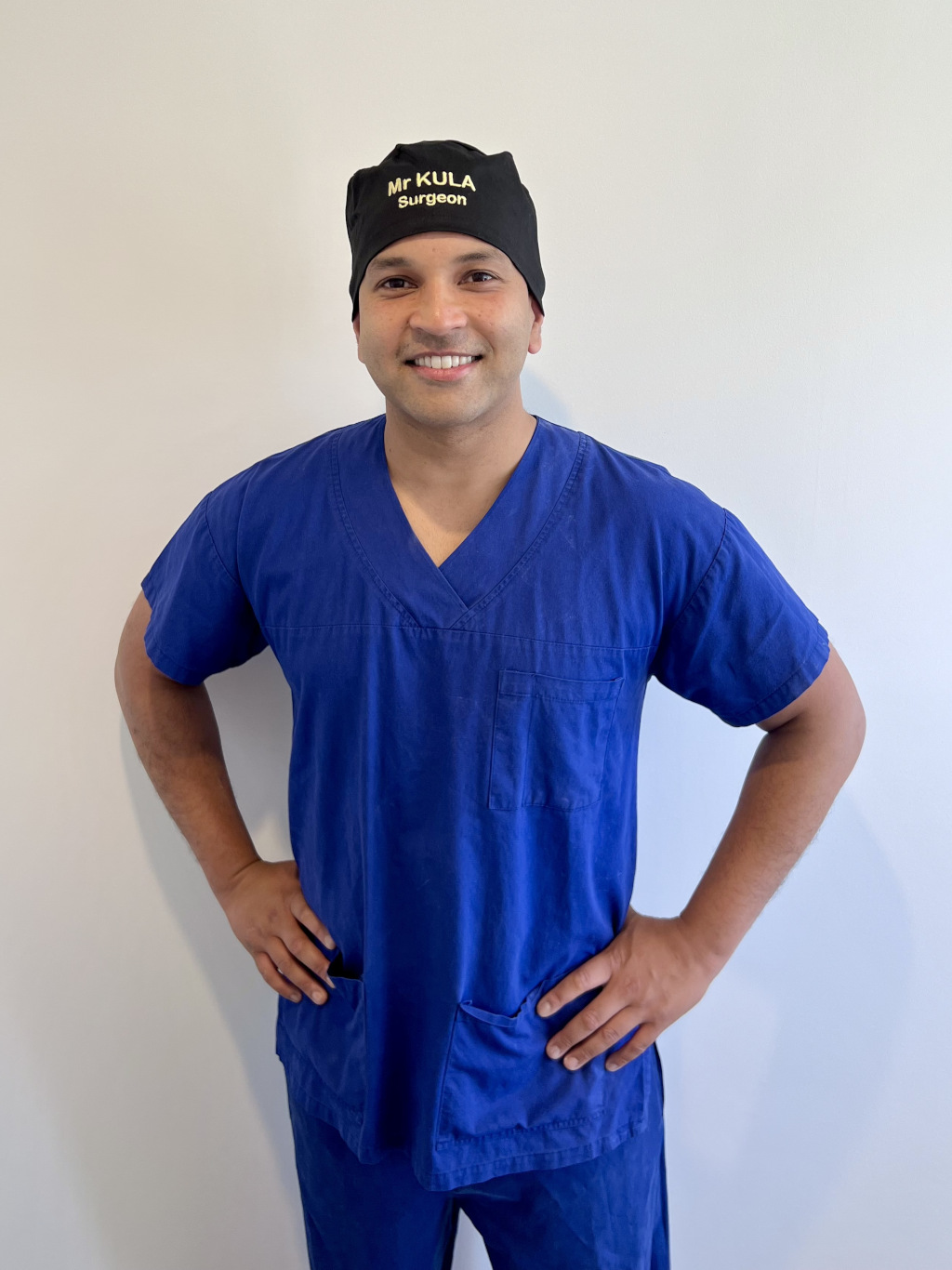
Yes. Mr Kulasegaran performs robotic upper gastrointestinal procedures, which can offer enhanced precision for complex cases. The suitability of robotic surgery will be discussed during your consultation.
I’ve had a previous anti-reflux operation that hasn’t worked. Can you help?
Yes. Our surgeons have extensive experience in revisional upper gastrointestinal surgery. We will review your history, conduct thorough assessment, and discuss options for redo surgery.