

Robotic Surgery
Mr Suheelan Kulasegaran performed New Zealand’s first robotic oesophagectomy and gastrectomy, and regularly undertakes advanced robotic upper gastrointestinal procedures including hiatal hernia repair and fundoplication surgery. Our practice utilises the Intuitive Surgical da Vinci robotic surgical system to deliver enhanced precision and minimally invasive care across upper gastrointestinal, bariatric, and general surgical procedures.
Applications of robotic surgery
The da Vinci robotic platform is used across a range of upper gastrointestinal, cancer, bariatric, and general surgical procedures.
Upper Gastrointestinal Surgery
Robotic-assisted anti-reflux surgery, hiatus hernia repair, and Heller myotomy for achalasia. The robotic platform provides enhanced visualisation and dexterity for complex upper gastrointestinal procedures.
Cancer Surgery
Robotic oesophagectomy and gastrectomy for oesophageal and gastric cancers. Mr Kulasegaran performed New Zealand's first robotic procedures in this field.
Bariatric Surgery
Robotic-assisted weight loss procedures including gastric bypass. The precision of robotic instruments can benefit complex or revisional bariatric cases.
General Surgery
Selected general surgical procedures including complex hernia repair and abdominal wall reconstruction where the robotic platform offers advantages over conventional laparoscopy.
Benefits of robotic surgery
The da Vinci robotic surgical system combines advanced 3D visualisation with instruments of exceptional precision to enhance surgical outcomes.
Enhanced Precision
The da Vinci robotic system provides 3D high-definition visualisation with up to 10x magnification, combined with instruments that move with greater precision than the human hand.
- 3D high-definition camera with magnification
- Wristed instruments with 7 degrees of freedom
- Tremor filtration for ultra-precise movements
- Superior visualisation of anatomical structures
Smaller Incisions
Robotic surgery is performed through small keyhole incisions, similar to standard laparoscopic surgery. This typically results in less pain, reduced scarring, and faster recovery.
- Typically 4–6 small incisions (8–12mm)
- Reduced post-operative pain
- Minimal scarring
- Lower risk of wound complications
Faster Recovery
Patients undergoing robotic surgery often experience shorter hospital stays and a quicker return to normal activities compared to traditional open surgery.
- Shorter hospital stays
- Earlier return to normal activities
- Reduced blood loss during surgery
- Lower rates of post-operative complications
Complex Cases
The robotic platform is particularly valuable for complex surgical cases, including revisional surgery and procedures in confined spaces where conventional instruments have limitations.
- Ideal for confined surgical spaces
- Enables complex reconstructive procedures
- Valuable for revisional and redo surgery
- Allows procedures that may not be feasible laparoscopically
What to expect
During your consultation
Your surgeon will assess whether robotic surgery is appropriate for your procedure. Not every operation requires a robotic approach — your surgeon will recommend it when it offers a genuine advantage for your specific case.
The procedure
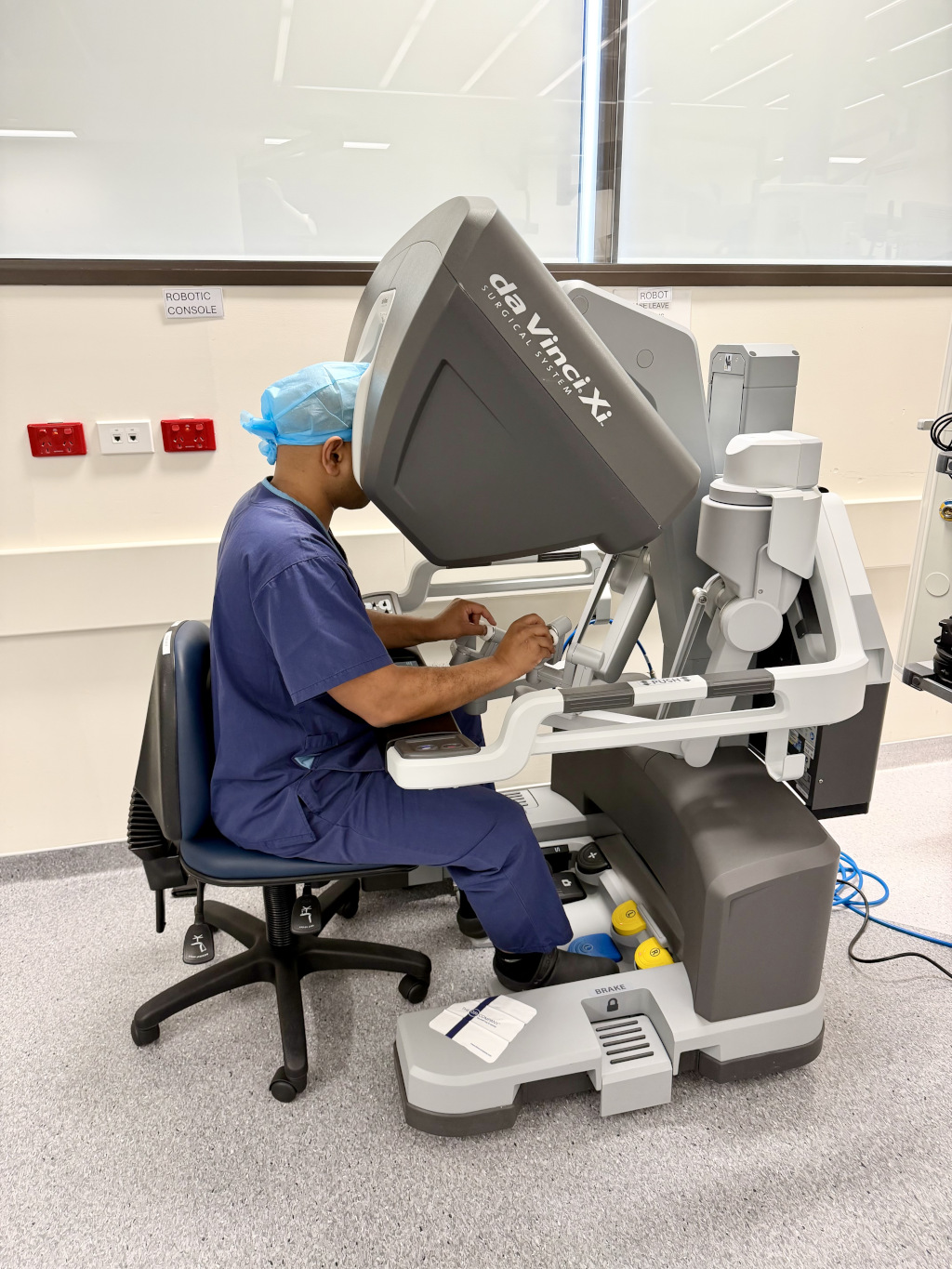
Robotic surgery is performed under general anaesthetic. Your surgeon sits at a console near the operating table, controlling the robotic instruments with hand and foot controls. The surgical team is beside you throughout.
Recovery
Recovery after robotic surgery is typically similar to or faster than standard laparoscopic surgery. Most patients experience less pain and can return to normal activities sooner than with open surgery. Your surgeon will provide specific guidance for your procedure.
Find out if robotic surgery is right for you
Not every procedure requires a robotic approach, but when it does, you want a surgeon with proven experience. Contact us to discuss whether robotic surgery may benefit your case.
Contact usFrequently asked questions
What is Robotic surgery?
Robotic surgery is an advanced minimally invasive techniques that allows greater precision and a greater view.
Who should be performing robotic surgery?
Robotic surgery is a tool. However, it should be performed by someone who is highly trained and with proven patient outcomes. Mr Suheelan Kulasegaran has performed the first total robotic Oesophagectomy and gastrectomy in New Zealand. He has proven patient outcomes and satisfaction.
Is robotic surgery safer than traditional surgery?
Robotic surgery offers advantages in precision and visualisation that can benefit certain procedures. Safety depends on many factors including the surgeon's experience. Mr Kulasegaran has extensive robotic surgical experience and will recommend the approach that is safest and most effective for your situation.
Does the robot perform the surgery?
No. The surgeon controls every movement of the robotic instruments. The da Vinci system is a tool that enhances the surgeon's capabilities — it does not make autonomous decisions or movements.
What procedures can be done robotically?
At our practice, robotic surgery is used for upper gastrointestinal procedures (anti-reflux, hiatus hernia), cancer operations (oesophagectomy, gastrectomy), selected bariatric procedures, and complex general surgical cases.
Will robotic surgery cost more?
Robotic surgery may involve additional costs compared to standard laparoscopic surgery due to the specialised equipment. Your surgeon will discuss any cost implications during your consultation and we can advise on insurance coverage.
How experienced is your surgeon with robotic surgery?
Mr Kulasegaran is one of New Zealand's most experienced robotic surgeons, having performed the country's first robotic oesophagectomy and gastrectomy. He has completed advanced robotic surgery training and performs robotic procedures regularly.